
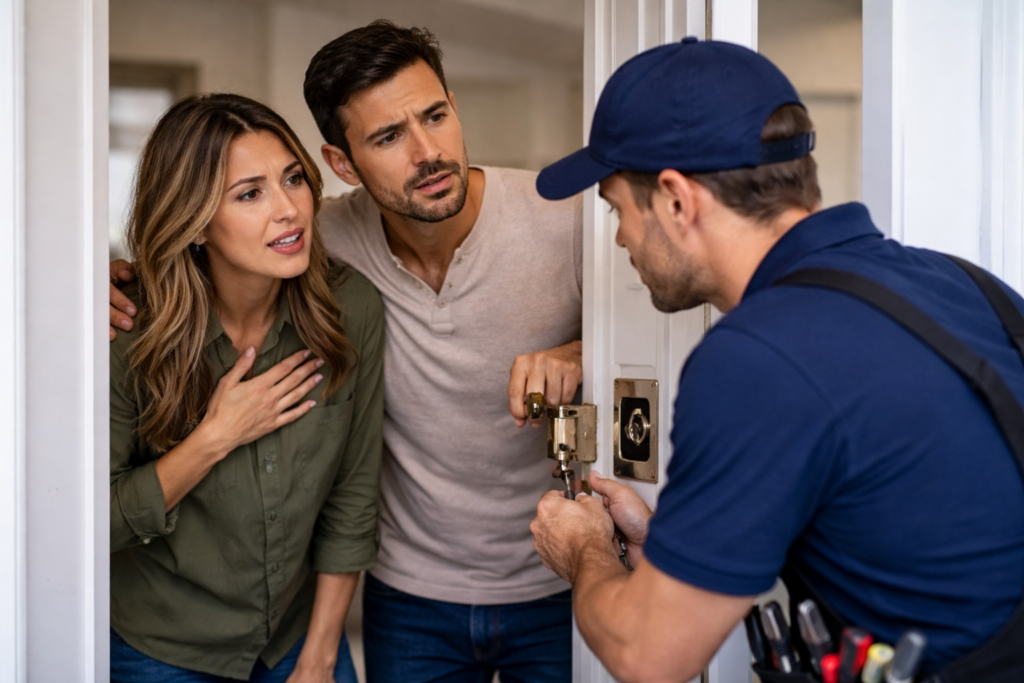
When a lock breaks or a door gets damaged, you’re not just dealing with a routine repair; it’s a real security issue. If a tenant says their door won’t lock, the handle’s broken, or the frame’s messed up, their safety’s on the line. Cosmetic issues can wait, but if they affect security or access, they’re a top priority.
Put yourself in the tenant’s shoes for a second. Imagine your front door won’t latch, or the deadbolt just spins and won’t catch. You’d feel exposed, especially at night or any time you’re away. For property managers, ignoring a broken lock isn’t just bad service; it can lead to headaches, from angry tenants to legal problems. Acting fast keeps everyone safe and heads off bigger issues before they start.
These problems pop up in all sorts of ways. Sometimes the key won’t turn, the digital lock quits, the door warps after a storm, or the strike plate doesn’t line up anymore.
Maybe it’s just old wear and tear. Sometimes it’s after someone tried to break in.
Doesn’t really matter why the result is always the same: less security, less control over who comes and goes.
That’s why you matter here. When a tenant reports a lock or door issue, the first step is simple: get the details. Where is the problem? Is it the front door, back door, bedroom, or a shared area? Can the door be locked at all, or is it wide open? Any sign someone tried to force their way in? If the tenant can’t lock up, that’s an emergency and needs to be handled right away.
Keep track of everything. Note the time the tenant reported the problem, what kind of lock or door it is, and whether the tenant feels unsafe. If they’ve done anything on their own, like blocking the door or staying with a neighbor, write it down. The more info you gather, the better prepared maintenance will be to fix the issue quickly.
Fixing these problems usually takes a team effort. Based on experience, I always recommend a locksmith. Other times, I refer this to our maintenance tech, who can handle it. You, as the virtual assistant, need to make sure work orders are detailed and urgent, with any special instructions included. If it can’t be fixed immediately, talk to the property manager about temporary fixes, maybe a temporary lock, changing out the lock, or helping the tenant get by until the repair’s done.
And don’t leave tenants in the dark. People get nervous when their home doesn’t feel secure. Even a quick update helps. After the repair, check back in and make sure everything’s working and the tenant feels safe again.
You should always remember:
Treat every lock and door issue as urgent.
Tenant safety comes first, even if it messes up your schedule.
Watch out for signs of break-ins or patterns with certain doors.
Don’t wait for perfect info if there’s a security risk, escalate fast.
Key takeaways:
Broken locks and doors are emergencies, not just another repair.
Fast action protects tenants and lowers your liability.
Good notes and clear info speed up repairs.
Always keep tenants in the loop when security is at risk.
Bottom line: Broken locks and doors need to be fixed right away. Tenant safety and trust are on the line. When virtual assistants jump in fast, keep the paperwork straight, and keep everyone in the loop, they turn a stressful situation into a quick, professional fix. In property management, secure doors mean safe people. That’s the job.