
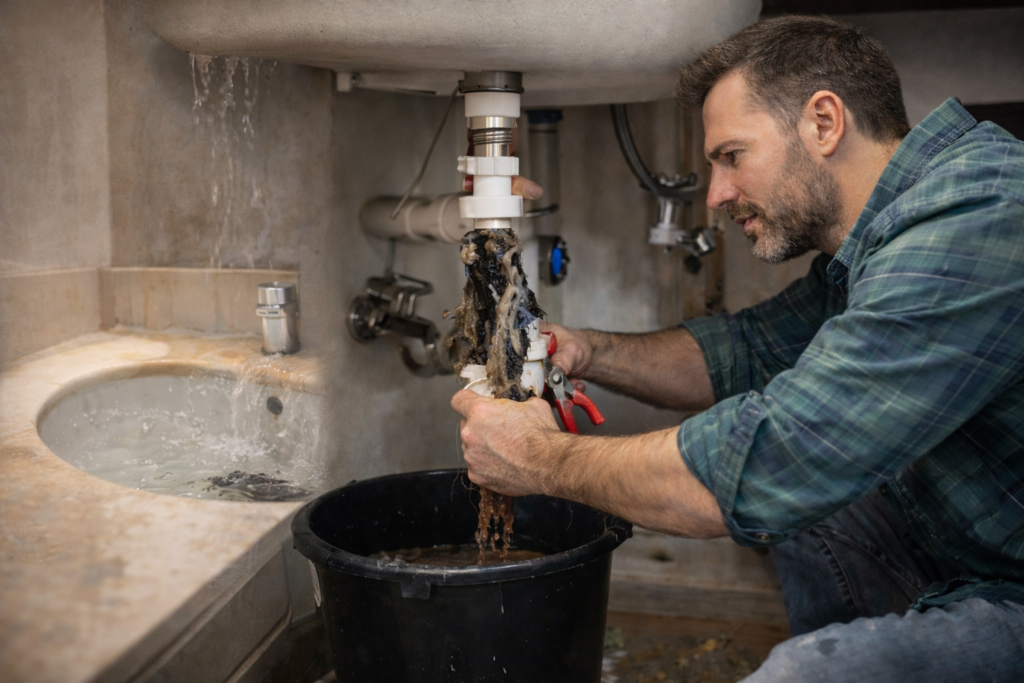
Clogged drains, honestly, they’re one of those things every property manager dreads. A slow sink or a backed-up toilet can start as a minor nuisance, but leave it alone for too long and you’re looking at water damage, bad smells, and some pretty unhappy tenants. If you manage properties or help someone who does, knowing what causes clogs, how to stop them, and when to call in the cavalry makes your life a lot easier.
Why Drains Get Clogged: Drains can clog for a whole bunch of reasons. In the kitchen, grease, oil, and leftover food start to build up, and before you know it, nothing’s getting through. Bathrooms are prone to hair, soap scum, and toothpaste globs. Tenants sometimes flush wipes, sanitary products, or paper towels, none of which belong in a toilet, and that can stop up pipes fast. In older buildings, hard water leaves mineral deposits that slowly choke off the pipes. And don’t forget outdoor drains, leaves, debris, and even ice in winter can block them up too.
If you know what caused the clog, it’s easier to figure out how bad things are and what to do next. A slow sink usually isn’t urgent, but if a toilet backs up into other fixtures or floods the floor, you’ve got to jump on that right away.
How to Keep Drains Clear: It’s way easier (and cheaper) to prevent clogs than to fix them after the fact. Virtual assistants can actually help a lot here by keeping tenants in the loop and making sure regular maintenance happens.
Here’s what works:
Talk to tenants. Remind them not to pour grease or oil down the kitchen sink.
Suggest using strainers to catch hair or food scraps. Make it clear what can and can’t go down the toilet. And ask them to report slow drains before things get out of hand.
Keep track of trouble spots. If the same unit keeps having issues, there’s probably a bigger problem.
Schedule professional drain cleaning for places that clog up a lot. In older buildings, regular plumbing inspections help catch mineral buildup before it gets serious.
When It’s Time to Escalate: Not every clog needs an emergency response, but some situations can’t wait:
● Water is backing up into several fixtures at once.
● You notice nasty smells usually a sign of stagnant water or bacteria.
● Toilets or sinks are overflowing and could cause water damage.
● There’s mold or mildew from ongoing drainage problems.
● When that happens, virtual assistants need to get all the details: where the clog is, when it started, what (if anything) has already been tried, and if more than one unit is having trouble.
That way, maintenance teams know exactly how urgent the problem is and can act fast.
How Virtual Assistants Help: Virtual assistants are the glue that holds this process together. They ask the right questions, jot down all the important info (date, time, location, what’s happening), and keep tenants updated on when repairs will happen. They make sure work orders are clear for whoever’s fixing the problem, and they follow up afterward to make sure the job really is done and to flag repeat issues for the future.
What to Remember:
Clogged drains can go from annoying to disastrous in no time.
Grease, hair, non-flushable stuff, and old pipes are the usual culprits.
Teaching tenants and doing regular maintenance stops most emergencies before they start.
Don’t wait to escalate when you see backups, bad smells, or water damage.
Virtual assistants keep everything moving: intake, documentation, updates, and follow-up.
Bottom Line:
Clogged drains might seem like a small hassle, but they can make or break a tenant’s experience and even put your property at risk. When property managers and virtual assistants know what to look for, stay on top of maintenance, and move quickly when something goes wrong, they keep problems small and tenants happy. It’s all about jumping on issues early, communicating clearly, and following through, showing tenants you care, and making everyone’s life a little easier.