
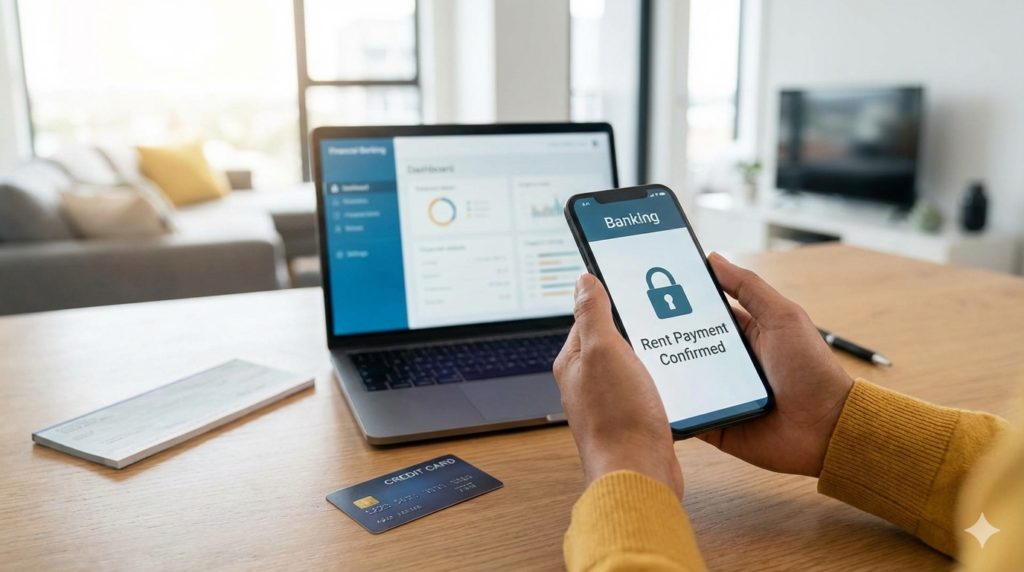
Imagine this: It’s the first of the month. Instead of driving to a drop-box to collect paper checks or manually logging money orders into a spreadsheet, you’re at home finishing breakfast. A notification pings on your phone—three tenants just paid their rent. No paperwork, no bank runs, and no “the check is in the mail” excuses.
That’s the reality for property managers moving toward digital systems. But for those of us who have handled physical payments for years, a fair question remains: Are digital payments truly safer and more efficient, or are we just trading one set of problems for another?
The Move to Digital
In the last few years, digital payments have shifted from a “perk” to an expectation. Platforms like AppFolio, Buildium, and PayRent have made it possible for tenants to pay via ACH, credit card, or even scheduled transfers.
While the convenience for the tenant is obvious, the real win is for the owner. Money hits the account faster, and the trail of digital breadcrumbs makes tax season significantly less painful. However, as we move away from paper, the focus shifts from physical security (locking the office door) to digital security (encryption and fraud detection).
1. Efficiency: Replacing the “Paper Trail” with Real-Time Data
Collecting rent by hand is a notorious time-sink. You’re not just waiting for checks; you’re chasing late payments, dealing with “bounced check” fees, and manually updating your ledger.
Digital systems automate the “nags.” For example, instead of a manager spending their Tuesday calling three different units, the system sends automated reminders three days before rent is due.
The Human Element: Andrea, who manages 85 apartments in Milwaukee, saw an immediate shift after making the change. “We used to spend the first week of every month just processing paper,” she says. “Switching to digital helped us cut our collection time from several days to just a few hours. What used to be a mountain of paperwork is now just a quick dashboard review.”
2. Safety: Avoiding the “Lost in the Mail” Trap
There is a common misconception that digital payments are riskier. In reality, paper checks and cash are far more vulnerable to human error and theft.
Consider the “Lost Check” scenario: A tenant claims they dropped a check in the slot, but you don’t have it. Was it stolen? Did the tenant forget? Was it misplaced in the office? This creates immediate friction. Digital payments eliminate this ambiguity with instant receipts.
Furthermore, modern platforms use bank-level encryption. When a tenant pays via an encrypted portal, their sensitive banking info is never actually seen by the property manager, reducing your liability. Compare that to a paper check sitting on a desk, which displays the tenant’s routing and account numbers for anyone to see.
3. Accountability: Reducing the “Awkward” Conversations
One of the hardest parts of the job is being the “bill collector.” Digital payments depersonalize the enforcement of rules. If a tenant is late, the system automatically applies the pre-agreed late fee.
Take the case of Marcus, a landlord in Atlanta. He dealt with a tenant who consistently claimed their “auto-pay” failed every month. Because Marcus used a digital platform, he could look at the logs and see that the tenant hadn’t actually set up auto-pay at all. Having that data allowed Marcus to have a factual, non-emotional conversation that resolved the issue permanently.
The Bottom Line
Digital rent payments aren’t just about following a trend; they are about professionalizing your workflow. By removing the manual labor of “chasing money,” you free up your time to focus on what actually maintains property value: maintenance, tenant relations, and growth.
When you choose a platform that is secure and easy to navigate, you aren’t just speeding up your cash flow—you’re building a more transparent, reliable, and “human-proof” business.